The Outlast Trials Lore: Murkoff, Trials, Timeline
Outlast Trials lore explained: follow Murkoff, the Reagents, Trials, Prime Assets, and the Cold War timeline while separating canon from inference.
FAQ
What is the lore behind Outlast Trials?
What year is The Outlast Trials set in?
Who are the Reagents in The Outlast Trials?
Are Prime Assets part of the Outlast Trials lore?
Is every Outlast Trials lore theory canon?
Quick answer: what is Outlast Trials lore?
Outlast Trials lore is the story of Murkoff’s Cold War human experimentation, experienced through the Reagents who are forced to complete Trials inside a controlled program. The game rarely pauses for a traditional cutscene. Instead, it lets the setting, objectives, character dialogue, Prime Assets, and scattered evidence build a picture of who is being tested and why. That makes the lore interesting, but it also makes certainty easy to overstate.
The useful reading order is simple: start with the premise that the official game materials establish, follow the objective and environment that the current Trial gives you, then compare clues before making a timeline claim. A line from a community video can point to a good question without becoming proof that every later update must follow it.
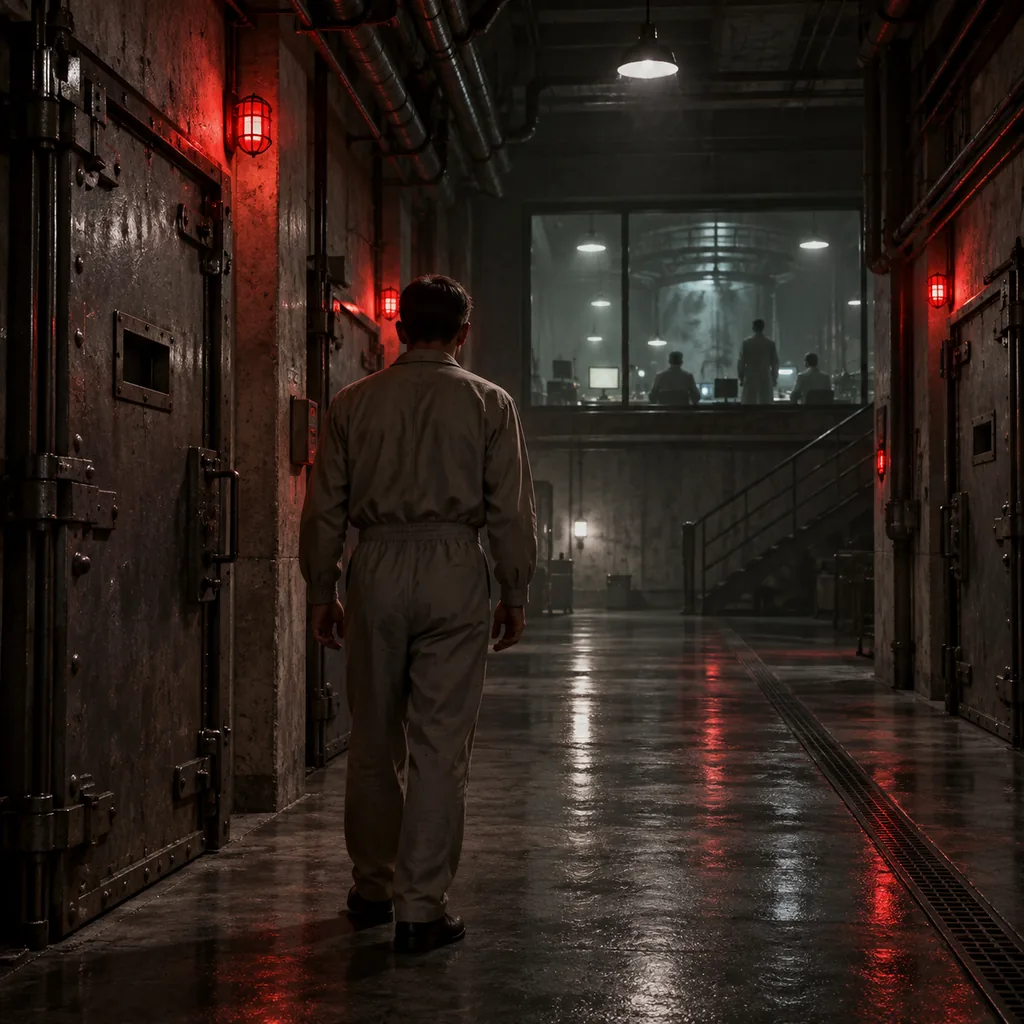
What the story is actually about
At the center is not a tournament and not a normal co-op mission. Murkoff turns a controlled environment into a repeatable behavioral experiment. The Reagents are placed under pressure, given a task, exposed to threats, and measured by how they react. The playable loop is therefore part of the narrative: an objective creates stress, an enemy changes the decision, and extraction shows whether the subject can complete the assigned behavior.
This framing explains why the game can feel like a collection of disconnected spaces while still having a coherent premise. A Trial is a test room in a larger system. A Program groups tests or conditions. A result, failure, or repeated attempt is useful to the organization even when it is not a clean victory for the Reagent. The Trials list is the practical index for activity names; the lore question is what those activities reveal about the experiment.
A cautious Outlast Trials timeline
The broad sequence is more reliable than a day-by-day chronology. Use the following as a reading framework rather than a claim that every date is printed in the current build.
| Story layer | What is safe to say | What still needs checking |
|---|---|---|
| Cold War research | Murkoff’s program is framed in a Cold War setting and uses human subjects. | A single exact calendar year when a prop or line is ambiguous. |
| Recruitment and containment | Reagents enter a controlled facility and are processed as research subjects. | The full history of every playable identity. |
| Trials and Programs | Objectives, spaces, and threats are arranged as repeatable tests. | Whether a seasonal activity is permanent or a temporary condition. |
| Prime Assets and Ex-Pop | Named and ordinary threats enforce the experiment’s pressure. | A fixed roster, spawn rule, or dialogue order after a patch. |
| After each run | The result feeds the experiment and the Reagent’s progression. | How every reward or outcome maps to a canonical event. |
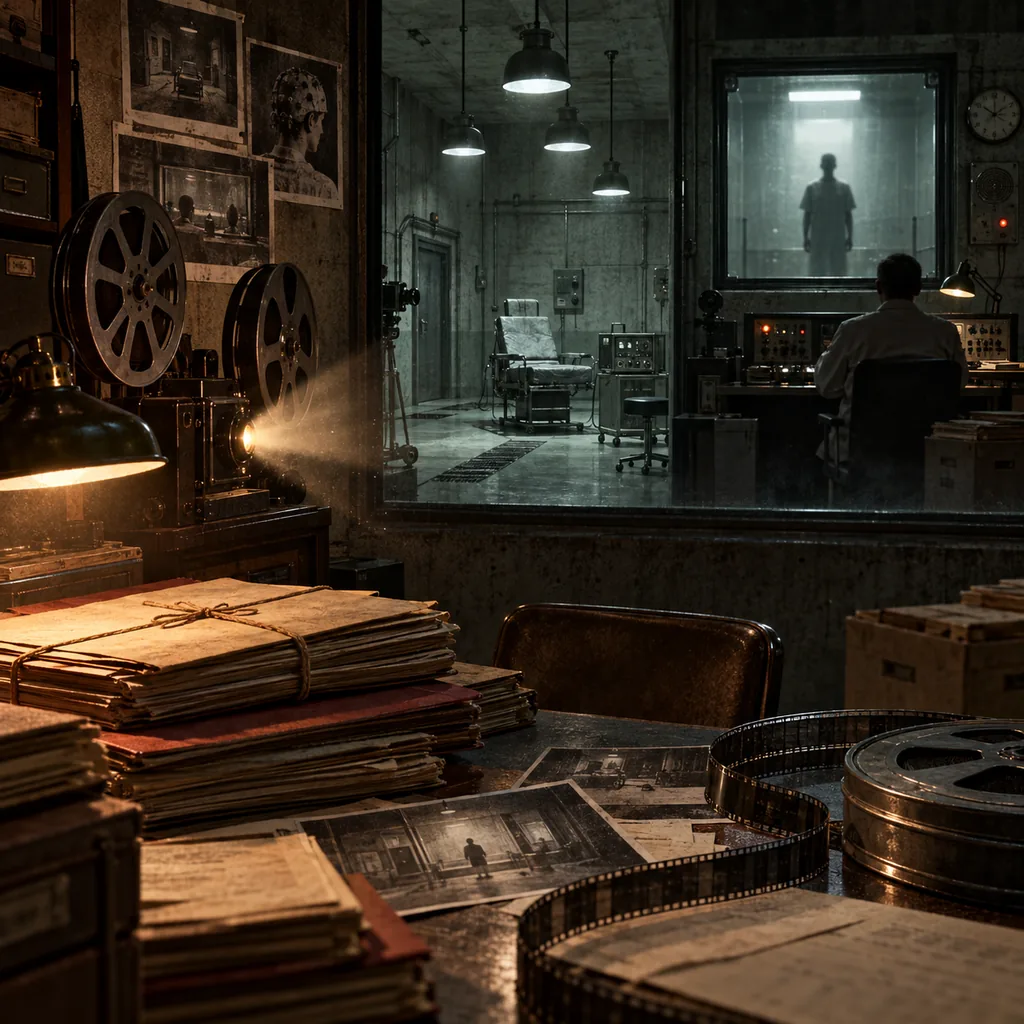
The distinction matters because live-service content can add a new objective without rewriting the premise. If a future patch changes a room, a named encounter, or the order of a Program, update that local fact and keep the durable experiment framing separate.
Murkoff, the Reagents, and the purpose of the Trials
Murkoff is the organizing force behind the experiment. In the wider Outlast setting, the company is associated with research that treats people as material for a program. In The Outlast Trials, that idea becomes an environment the player must inhabit rather than a backstory that stays in a codex. Doors, announcements, observation windows, medical rooms, and scripted tasks all reinforce the same relationship: the subject is watched, the test has a desired response, and the institution controls when the next condition begins.
The Reagent role explains the game’s co-op design. A team is not four independent heroes clearing a level; it is a group of subjects whose actions create data together. A rescue, a distraction, a noisy interaction, or a decision to abandon an objective can all be read at two levels: it is a useful play choice and it is a reaction the program is trying to provoke. The player-count guide covers the practical group sizes, while this page supplies the narrative reason that cooperation is so central.
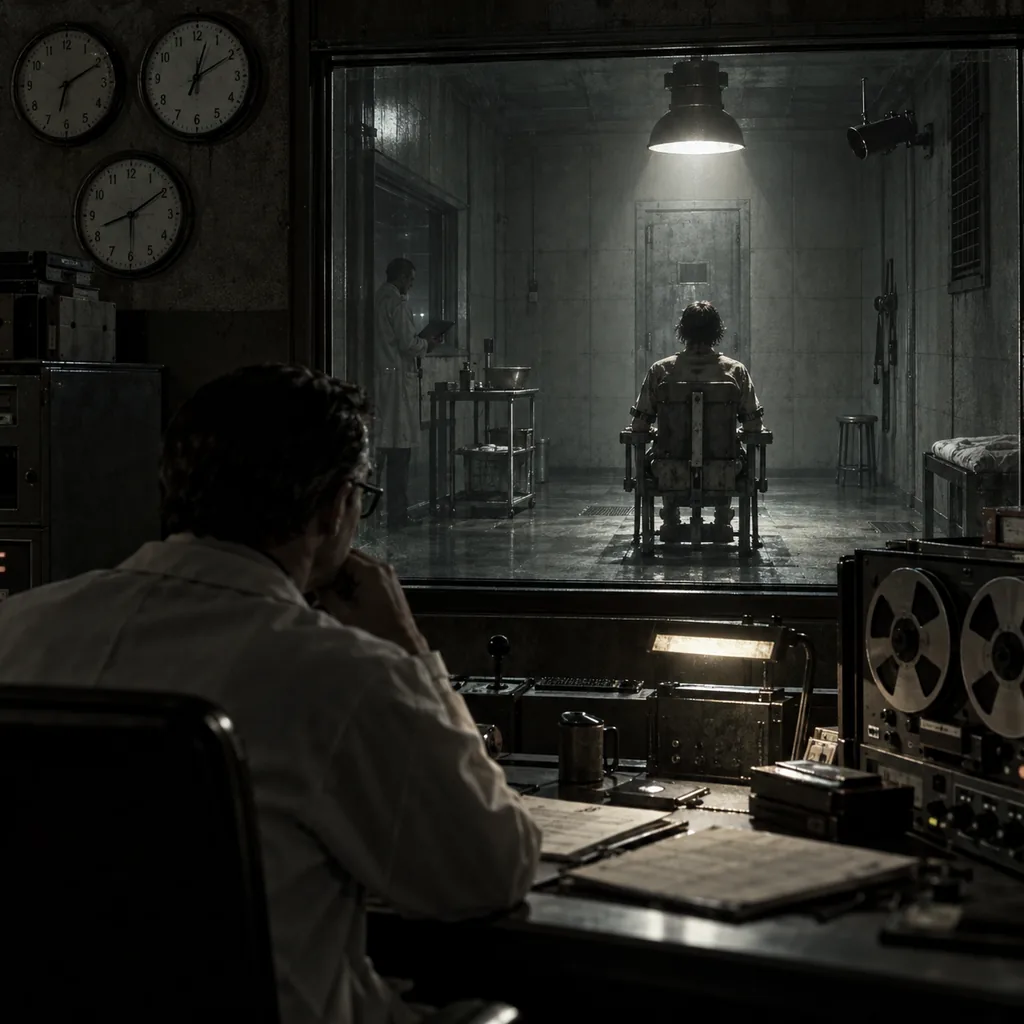
How gameplay delivers story context
Look for four kinds of evidence when you want to understand a Trial without over-reading it:
- The objective language. Verbs such as transport, activate, destroy, or escape tell you what the program wants the Reagent to do. The wording is a stronger source than a guide that paraphrases a previous rotation.
- The space around the objective. A school, police station, factory, or underground room is not just a combat arena. Its props and route design show what kind of fear or social behavior the test is trying to produce.
- The voice and presence of a threat. Prime Assets and Ex-Pop turn a broad idea into a pressure pattern. A warning or line of dialogue can identify an encounter, but it does not automatically prove a complete biography.
- Repeatable evidence. A detail seen in the current game, official patch notes, or an official announcement is stronger than a single old clip. Record the version and activity name before calling a clue permanent.
This method also explains why the Season 7 tracker is separate from this page. Seasonal information is useful context, but it can age faster than the premise. A lore page should preserve the question and the evidence boundary even when a temporary Program rotates out.
Prime Assets, Ex-Pop, and the Reagent perspective
Prime Assets are important because they connect personal encounters to the institution’s larger design. They are not simply a list of bosses. Their dialogue, visual identity, and control over a space tell the player what the experiment considers a successful fear response. The existing enemies guide is the right place for warning cues, route decisions, and cautious encounter advice. This page only uses those names to explain the story relationship.
Ex-Pop threats provide the everyday pressure that makes the experiment repeatable. They patrol, interrupt, and punish predictable behavior. That repetition is part of the point: the Reagent is tested under enough similar conditions that a change in decision can be observed. It also means that a fixed enemy count or universal behavior claim should be treated carefully after a patch.
Confirmed fact versus interpretation
When a clue feels important, classify it before sharing it:
| Label | Use it for | Wording that keeps the page honest |
|---|---|---|
| Official framing | Red Barrels’ game premise, platform description, or published update | “The official game page describes…” |
| Current observation | A repeatable line, prop, route, or objective in the reviewed build | “In the current activity, players can observe…” |
| Community lead | A clip, discussion, or theory that points to a question | “Players have proposed…” |
| Interpretation | A connection between clues that is not directly stated | “This may suggest, but does not confirm…” |
The official Red Barrels game page is the primary source for the game’s broad premise and platform framing. The Steam listing is useful for the store description and PC context. Neither source should be stretched into proof of a particular Prime Asset route, reward meaning, or exact date.
FAQ
The questions below keep the most searched lore variants on one page so they do not create several thin URLs. Recheck time-sensitive details after a major update and use the activity name shown in the current menu.
Related pages
guides
The Outlast Trials Rebirth: How It Works and What to Check
The Outlast Trials Rebirth guide: verify the current prompt, prepare a run, choose solo or co-op, and check codes, film reels, rewards, and progress safely.
characters
Outlast Trials Prime Assets: Roster, Roles and Encounter Guide
The Outlast Trials Prime Assets explained with a careful roster, role differences, current-count limits, warning cues, and a repeatable encounter note method.
characters
Outlast Trials Enemies Guide: Threats, Warnings and Escape Decisions
Outlast Trials enemies explained by threat role, warning cues, Prime Assets, Warden questions, party response, Rig choices, and patch-safe escape habits.
Was this helpful?
Thanks for the feedback.